January 8, 2024
Work of building relationships never stops
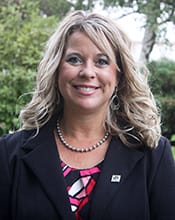 By Michelle Hennings
Executive Director, Washington Association of Wheat Growers
Boy, does time fly by.
I can’t believe it’s already time for my executive director column. The past six months have been busy with travel, meetings, and working many issues. We’ve done farm bill fly-ins to Washington, D.C.; participated in multiple workgroups and a Food for Peace event; organized a congressional tour of the river system; participated in multiple dam advocacy events; and celebrated a huge transportation grant for our short-line rails.
The farm bill is at the top of everyone’s agenda in D.C. We ended up with a one-year extension, which isn’t ideal, but we are working diligently to stay in front of leadership, making sure they are aware that we don’t want to see an extension for very long — we all remember the 2008 bill that was extended multiple times — and that we need a new and improved bill so family farms can continue supplying our nation’s food in a sustainable manner. Fly-ins are vital when dealing with these big, congressional issues and bringing farmers to meet legislators and staff to tell the ag story IS effective. Congress wants to hear, not read, about real-life farm stories on the issues at hand and learn how they affect your farm. Getting in front of our leadership, educating them firsthand, fostering a relationship of trusted knowledge, and making an impact on the decisions they make on behalf of Washington wheat farmers is what the Washington Association of Wheat Growers (WAWG) is all about.
Workgroups at the state level have been a WAWG priority these past six months. One of the groups we participated in was with the Washington State Department of Ecology (Ecology) to find a way to apply our ag fuel exemption that was included — but never implemented — in the cap-and-trade legislation. What a frustrating process for all parties involved. Farmers have paid thousands of dollars in extra fuel charges since January of 2023, and they still haven’t been reimbursed or even have a plan from the state to get reimbursed. We have advocated for a solution and relayed to legislative leaders this must happen, but to my dismay, I don’t see a quick resolution coming. Although the workgroup process wasn’t as productive as I would have expected, it was important for us to be at a table that included different views to discuss and educate the group on what farmers need and to develop relationships to work further to find solutions.
In August, we attended a Food for Peace event in Longview, Wash. It was a great way to celebrate the fight against global hunger, wheat farmers’ contributions to the humanitarian effort, and building positive relationships with other countries. It also set the stage for the American Farmers Feed the World Act, which would refocus the Food for Peace program on using U.S. commodities instead of cash donations or buying those commodities from other countries. Washington state plays a big role in supporting wheat exports and food aid contributions.
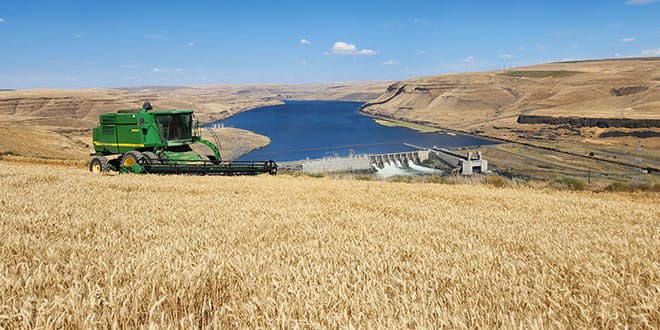
I won’t deny it — a lot, and I mean a lot of my time has been spent advocating for our transportation system and keeping the lower Snake River dams intact. A brief list includes:
By Michelle Hennings
Executive Director, Washington Association of Wheat Growers
Boy, does time fly by.
I can’t believe it’s already time for my executive director column. The past six months have been busy with travel, meetings, and working many issues. We’ve done farm bill fly-ins to Washington, D.C.; participated in multiple workgroups and a Food for Peace event; organized a congressional tour of the river system; participated in multiple dam advocacy events; and celebrated a huge transportation grant for our short-line rails.
The farm bill is at the top of everyone’s agenda in D.C. We ended up with a one-year extension, which isn’t ideal, but we are working diligently to stay in front of leadership, making sure they are aware that we don’t want to see an extension for very long — we all remember the 2008 bill that was extended multiple times — and that we need a new and improved bill so family farms can continue supplying our nation’s food in a sustainable manner. Fly-ins are vital when dealing with these big, congressional issues and bringing farmers to meet legislators and staff to tell the ag story IS effective. Congress wants to hear, not read, about real-life farm stories on the issues at hand and learn how they affect your farm. Getting in front of our leadership, educating them firsthand, fostering a relationship of trusted knowledge, and making an impact on the decisions they make on behalf of Washington wheat farmers is what the Washington Association of Wheat Growers (WAWG) is all about.
Workgroups at the state level have been a WAWG priority these past six months. One of the groups we participated in was with the Washington State Department of Ecology (Ecology) to find a way to apply our ag fuel exemption that was included — but never implemented — in the cap-and-trade legislation. What a frustrating process for all parties involved. Farmers have paid thousands of dollars in extra fuel charges since January of 2023, and they still haven’t been reimbursed or even have a plan from the state to get reimbursed. We have advocated for a solution and relayed to legislative leaders this must happen, but to my dismay, I don’t see a quick resolution coming. Although the workgroup process wasn’t as productive as I would have expected, it was important for us to be at a table that included different views to discuss and educate the group on what farmers need and to develop relationships to work further to find solutions.
In August, we attended a Food for Peace event in Longview, Wash. It was a great way to celebrate the fight against global hunger, wheat farmers’ contributions to the humanitarian effort, and building positive relationships with other countries. It also set the stage for the American Farmers Feed the World Act, which would refocus the Food for Peace program on using U.S. commodities instead of cash donations or buying those commodities from other countries. Washington state plays a big role in supporting wheat exports and food aid contributions.
I won’t deny it — a lot, and I mean a lot of my time has been spent advocating for our transportation system and keeping the lower Snake River dams intact. A brief list includes:
- Giving testimony in Richland, Wash., for a U.S. House Natural Resource Committee field hearing.
- Providing written comments and attending Council on Environmental Quality listening sessions.
- Writing multiple letters reinforcing our position that we need to be at the table during any kind of negotiations.
- Strategizing with other Pacific Northwest ag groups as a coalition effort to educate legislators and Congress on the implications of dam removal.
- Taking part in a multitude of media engagements, issuing press releases, and writing letters to state and federal leaders.
- Organizing a congressional staffer tour of Lower Granite Dam and the Port of Clarkston.